Design · July 1, 2026 · 7 min read
Cabinet Door Styles, Explained: Shaker, Slab, Inset, and What's Working in Boise Kitchens Right Now
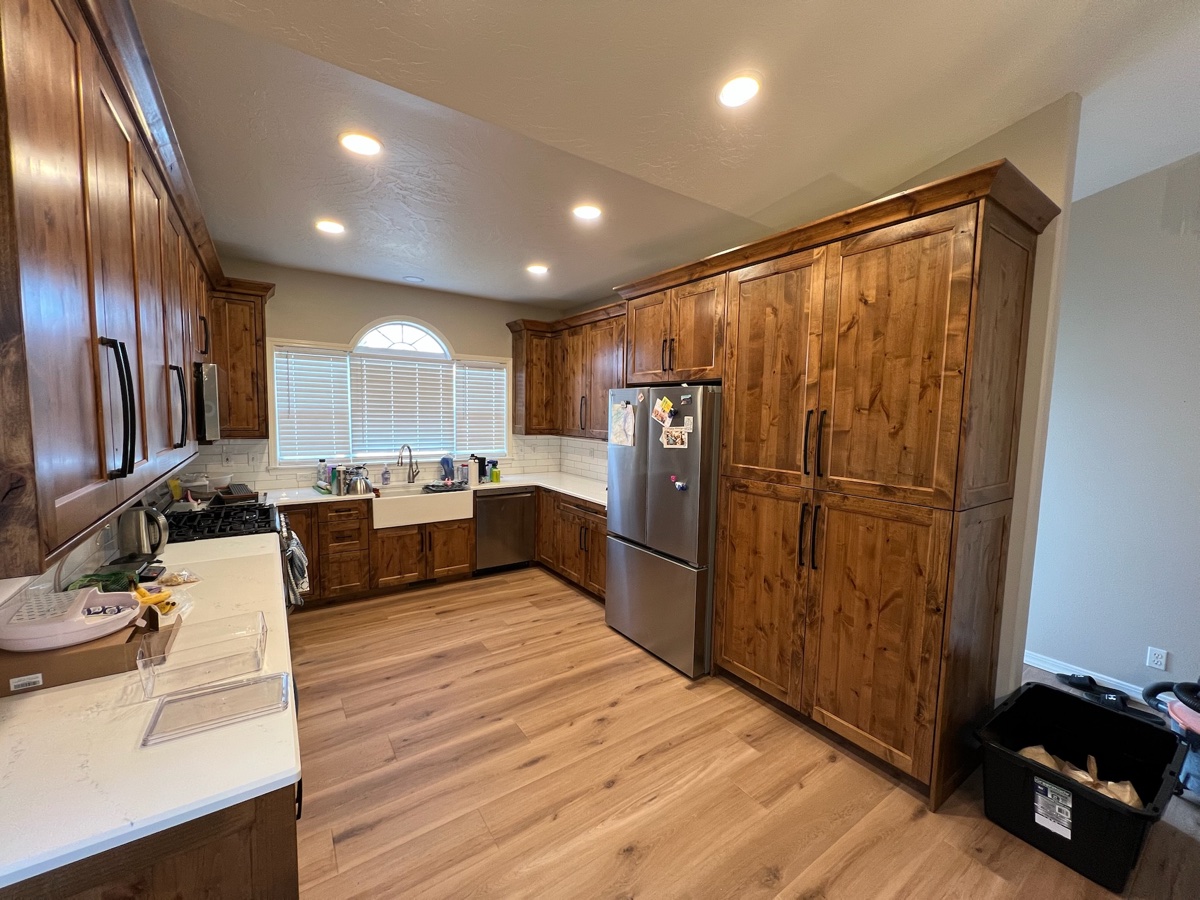
The door style you choose sets the personality of the whole kitchen — and it's also one of the bigger cost levers in a cabinet project. Here's how we walk clients through the decision, using the same terms we use in the shop.
The two decisions people mix up
A cabinet door involves two separate choices that often get tangled together:
- Door style — what the door itself looks like (shaker, slab, raised panel...)
- Mounting style — how the door sits on the cabinet (inset vs. overlay)
You can have a shaker door in either mounting style. Untangling the two makes the whole conversation easier.
Door styles
Shaker: the style that refuses to date itself
A shaker door is a five-piece door — four flat frame pieces around a flat center panel. It's the most requested door in our shop by a wide margin, and there's a reason it has survived every trend cycle since the actual Shakers: it reads as clean in a modern kitchen, classic in a traditional one, and right at home in the farmhouse-and-mountain aesthetic that dominates Treasure Valley builds.
Variations worth knowing: skinny shaker (narrower frame rails for a more contemporary look) and beaded shaker (a small detail line inside the frame, leaning traditional).
Slab: clean, modern, and honest
A slab door is a single flat panel — no frame, no profile. It's the door of contemporary and European-style kitchens, and it's gaining ground fast in newer Boise builds. Slab in a warm wood grain (white oak especially) is having a genuine moment; slab in paint reads sleek and minimal.
Slab doors put all the pressure on material and finish quality — with no profile to catch the eye, every surface flaw shows. Done well, nothing looks cleaner.
Raised panel: traditional, and quieter lately
The raised panel door — a center panel with a profiled, raised field — ruled the 1990s and 2000s. It still belongs in formal traditional homes, but demand around Boise has swung decisively toward shaker and slab. If you love it, build it; just know it anchors the kitchen firmly in traditional territory.
Inset vs. overlay: the mounting decision
Overlay doors sit on top of the cabinet face. Full overlay — where doors nearly cover the whole box face with tight reveals — is the modern standard and what most people picture.
Inset doors sit inside the cabinet opening, flush with the face frame, the way furniture and pre-war kitchens were built. Inset is the premium look: crisp, architectural, unmistakably custom. It also demands real precision — the door has to fit its opening with an even gap on all four sides, year-round, through Idaho's dry winters and hot summers. That precision is shop work, not factory work, and it prices accordingly.
If you're chasing the high-end built-by-hand look and the budget allows it, inset delivers. If you want maximum storage access and a cleaner budget, full overlay gives up very little.
Painted, stained, or natural?
- Painted remains the Treasure Valley favorite — whites, creams, and the deep greens and near-blacks that have moved from trend to staple. Painted finishes pair naturally with MDF-panel doors for a glass-smooth surface.
- Stained wood is quietly returning after a decade of paint dominance — especially medium, natural-leaning tones that show real grain.
- Two-tone is the current sweet spot in Boise kitchens: painted perimeter with a wood island, or shaker uppers over slab lowers. It adds depth without committing the whole room to one statement.
What we're actually building right now
If we generalized the last year of our order book: shaker (and skinny shaker) in paint for the perimeter, warm wood tones on islands and accents, slab gaining share in modern builds, and hardware trending toward simple pulls in brushed brass and matte black.
But the honest advice is the same one we give at every consultation: trends are for people who remodel every five years. Pick the door that fits your house's architecture and the way you want the room to feel, get the material and construction right underneath it, and it will still look correct in twenty years.
Want to see how door style changes your project budget? Our free estimator lets you compare selections in about 5 minutes.