In the Shop · July 6, 2026 · 6 min read
From Sheet Goods to Your Kitchen: How Custom Cabinets Are Actually Built in Our Boise Shop
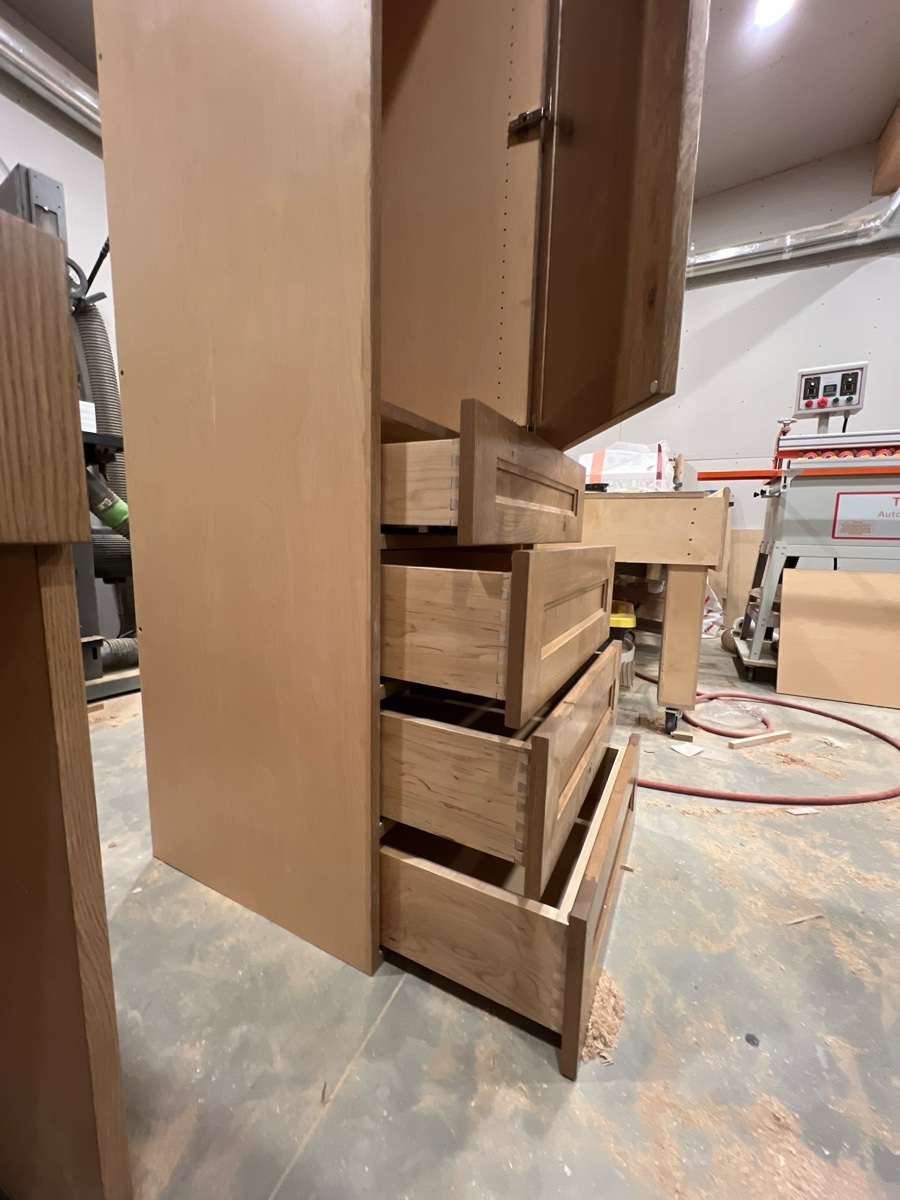
"Custom cabinets" gets used loosely in this industry — sometimes it means a factory order with a nonstandard width, sometimes it means a semi-custom line with extra options. Here's what it means in our shop: raw materials come in one door, finished cabinetry goes out the other, and the two people who bid your job did every step in between.
This is how a kitchen actually gets built.
Step 1: design becomes a cut list
Every project starts as measurements from your home — real walls, real corners, real out-of-level floors. Those measurements become a cabinet-by-cabinet design, and the design becomes a cut list: every panel, every part, every dimension, generated from professional cabinet design software so the numbers that reach the saw are the numbers from your walls.
This is the step that separates custom from stock. A stock cabinet was designed for a warehouse; yours was designed for the north wall of your kitchen, including the part where it bows an eighth of an inch.
Step 2: the CNC earns its keep
Sheet goods — plywood for boxes and drawer boxes — get broken down and cut on our CNC router. If you haven't watched one work, it's a computer-guided cutting head that executes the cut list with repeatable precision, every part identical to its drawing, every shelf pin hole and joint exactly where the design put it.
Why it matters to you: consistency. Doors that reveal evenly, drawers that align across a full run, and an inset gap that stays even on all four sides — that's not patience, it's precision at the part-cutting stage. Machines cut parts; craftsmen still decide everything the machine does and build everything that comes after.
Step 3: boxes, drawers, and the parts you'll never see
Assembly turns flat parts into cabinets. Boxes go together square — checked diagonally, because a box that's off an eighth out of square will fight you at every later step. Drawer boxes are built in-house from plywood and fitted with soft-close undermount slides. Hinge plates and hardware mounting go into wood that will hold screws for decades.
This is also where the invisible quality lives: how the back attaches, how corners are joined, whether the drawer bottom is captured or stapled. Nobody sees these choices in a showroom. Everybody lives with them for twenty years.
Step 4: finishing — the slowest, most unforgiving step
Finish is half of what you perceive as quality, and it can't be rushed. Painted work gets primed, sanded, and sprayed in multiple coats with real cure time between them; stained work gets color, seal, and topcoats that protect the wood while showing it. Every hour spent sanding shows in the final surface — and every shortcut does too.
Spraying happens in the shop under controlled conditions, not in your driveway. It's one more reason cabinets are built before your kitchen is demoed: your finish cures on our schedule, not around your household.
Step 5: install, where it all pays off
Finished cabinetry travels to your home, and installation is where custom work shows its difference. Boxes built to your actual walls go in level, flush, and scribed tight. Doors and drawers get their final adjustments so gaps run even, hardware aligns down the whole run, and everything closes with that soft, solid consistency that reads — instantly — as quality.
Then the final walkthrough: we walk every detail with you before we pack up. We don't consider a job done until you do.
Direct owner oversight from scope to installation
Direct owner oversight keeps the design, material choices, fabrication and installation connected. We coordinate shop production and any qualified project partners around the agreed scope, with clear communication through each stage of the work.
That's the version of "custom" we mean.
Curious what shop-built cabinetry would run for your project? Get a rough range in about 5 minutes — no phone call required.
For commercial plans and specifications, request a casework or millwork bid or review our commercial capabilities.