Materials · June 22, 2026 · 6 min read
Plywood vs. Melamine Cabinet Boxes: Why We Build Melamine as Our Standard
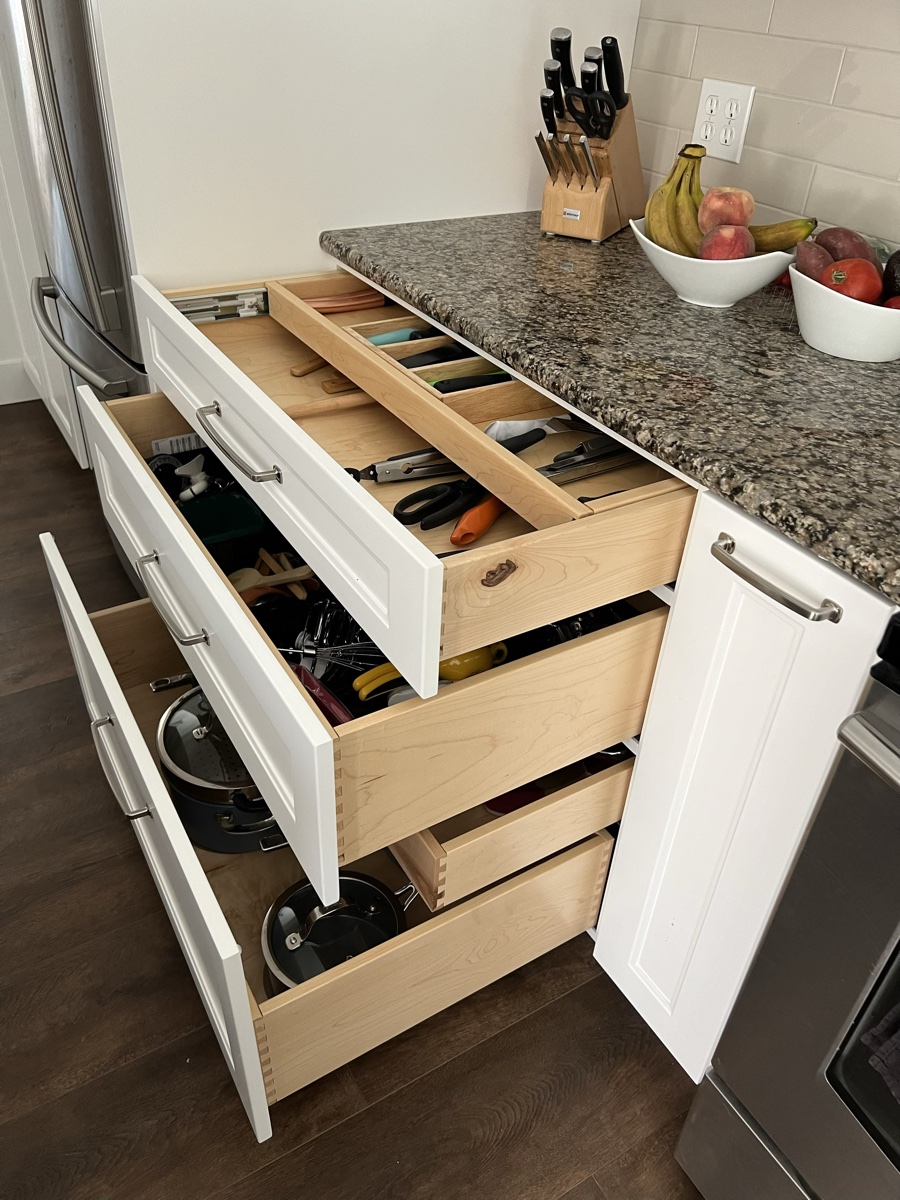
When you shop for cabinets, everyone shows you doors — door style, finish color, hardware, the parts you see. Almost nobody talks about the box behind the door, and the box is what you live with every day for the life of the kitchen.
In the Treasure Valley, that box is usually one of two things: plywood or melamine. We build with both in our Boise shop, and for most of our clients we recommend melamine. Here's the plain-English breakdown of each, and why melamine is our default.
First, what "melamine" actually is
Melamine isn't a mystery material — it's a particleboard (or sometimes MDF) core with a tough, thermally fused melamine surface bonded to every face. That factory-applied surface is the whole point: it's what gives melamine its hard, sealed, color-consistent finish. Most cabinet boxes sold in this valley are melamine, and it's become the regional standard for good reasons.
So when people say "particleboard box," they often mean a raw, uncoated core. When they say "melamine box," they mean that same family of core with a durable finished surface on it. The distinction matters, because that surface changes how the box behaves — and it's a big part of why we favor it.
Melamine: the pros
- Scratch and wear resistance. The fused surface is harder than most wood finishes. It shrugs off day-to-day scuffs, drips, and cleaning better than an unfinished interior — this is the single biggest reason we lean on it.
- Easy to clean. The sealed, non-porous face wipes down fast and doesn't absorb spills or stains.
- Color consistency. Every box comes out the same uniform white or color, with a clean, modern look inside the cabinet.
- Cost. Melamine is generally less expensive than plywood, which keeps the overall project budget down without giving up a durable, finished interior.
- Flat and stable. The sheets are dead-flat and dimensionally consistent, so boxes go together square and stay that way.
Melamine: the cons
- The core is only as good as it stays sealed. The surface resists moisture, but the particleboard core underneath does not. If water gets past the coating — a raw edge, a drilled hole, a chipped corner — the core can swell. In practice, quality edge-banding and clean construction keep this from being a day-to-day issue.
- Screw holding. Fasteners grip compressed chips rather than layered wood fiber. Built and hardware-mounted properly, this holds up fine for normal use, but it's a real difference from plywood under heavy abuse.
- Weight. Melamine boxes are heavier than the equivalent plywood box.
- Repairability. A gouge through the surface exposes the core and generally can't be sanded or refinished the way wood can.
Plywood: the pros
- Screw holding. Fasteners bite into real wood plies, so hinges and drawer slides stay tight for decades.
- Moisture tolerance. Plywood can take a leak-and-dry event without disintegrating. It's not waterproof, but it forgives plumbing incidents better than a raw core.
- Strength-to-weight. Stronger and lighter than melamine — shelves span farther without sagging, and wall cabinets hang with less strain on the fasteners.
- Appearance. Real wood plies give a natural look and edge that many people prefer, especially in open shelving or glass-front cabinets.
- Longevity and repairability. A quality plywood box is a 20-to-40-year box, and minor damage can often be sanded or patched.
Plywood: the cons
- Cost. Plywood runs more than melamine. On a full kitchen the difference is real, though it's a modest percentage of the whole project.
- Surface durability. A finished or unfinished plywood interior isn't as hard or as scratch-resistant as a melamine face, and it can stain or absorb spills if left unsealed.
- Voids and quality range. Cheaper plywood can have internal voids or uneven plies; not all plywood is created equal, so grade matters.
- Color variation. Natural wood means natural inconsistency — grain and tone vary sheet to sheet.
A note on water damage and insurance
If your cabinets are ever caught in a water incident — a burst supply line, a dishwasher failure, a slab leak — the restoration answer is usually the same regardless of material. On an insured restoration claim, carriers typically replace all the affected boxes whether they're plywood or melamine rather than trying to salvage them. So the moisture edge plywood has doesn't usually change the outcome when you're working through insurance after a loss — another reason we're comfortable making melamine our standard.
Where we recommend plywood instead
Melamine is our default, but it isn't the only right answer. We'll steer toward plywood when:
- Appearance is the priority — natural wood interiors, open shelving, or glass-front cabinets where you'll see the box.
- You want the maximum-longevity, premium build and the added cost isn't a concern.
- The application is unusually demanding on fastener strength or shelf span.
If any of those describe your project, just tell us — we build plywood boxes all the time and are glad to spec them.
How to compare quotes
This is a big reason bids vary so much for the "same" kitchen. When you're comparing, ask every bidder the same three questions: What are the boxes made of? What are the doors made of? What are the drawer boxes made of? Two quotes built on different materials aren't the same kitchen, even if the doors look identical.
The honest summary
| Melamine (our default) | Plywood | |
|---|---|---|
| Cost | Lower | Higher |
| Surface durability | Excellent — hard, sealed face | Good (finish-dependent) |
| Screw holding | Fair to good | Excellent |
| Moisture tolerance | Surface resists; core is vulnerable if breached | Forgives leak-and-dry |
| Weight | Heavier | Lighter |
| Appearance | Uniform color, clean and modern | Natural wood |
| Repairability | Limited | Can sand/patch |
For most kitchens, melamine gives you a hard, scratch-resistant, easy-to-clean, cost-effective box that holds up beautifully to daily life — which is why it's what we build unless a project calls for something else. When appearance or a premium build matters most, plywood is a great choice, and we're happy to go that direction.
Planning a kitchen or bath project in the Treasure Valley? We build both plywood and melamine boxes — melamine is our standard, but we'll spec what's right for your space. Get a rough estimate for your project in about 5 minutes.