Commercial · August 3, 2026 · 7 min read
Restoring Historic Exterior Trim on a Deferred-Maintenance Building: Matching Original Profiles
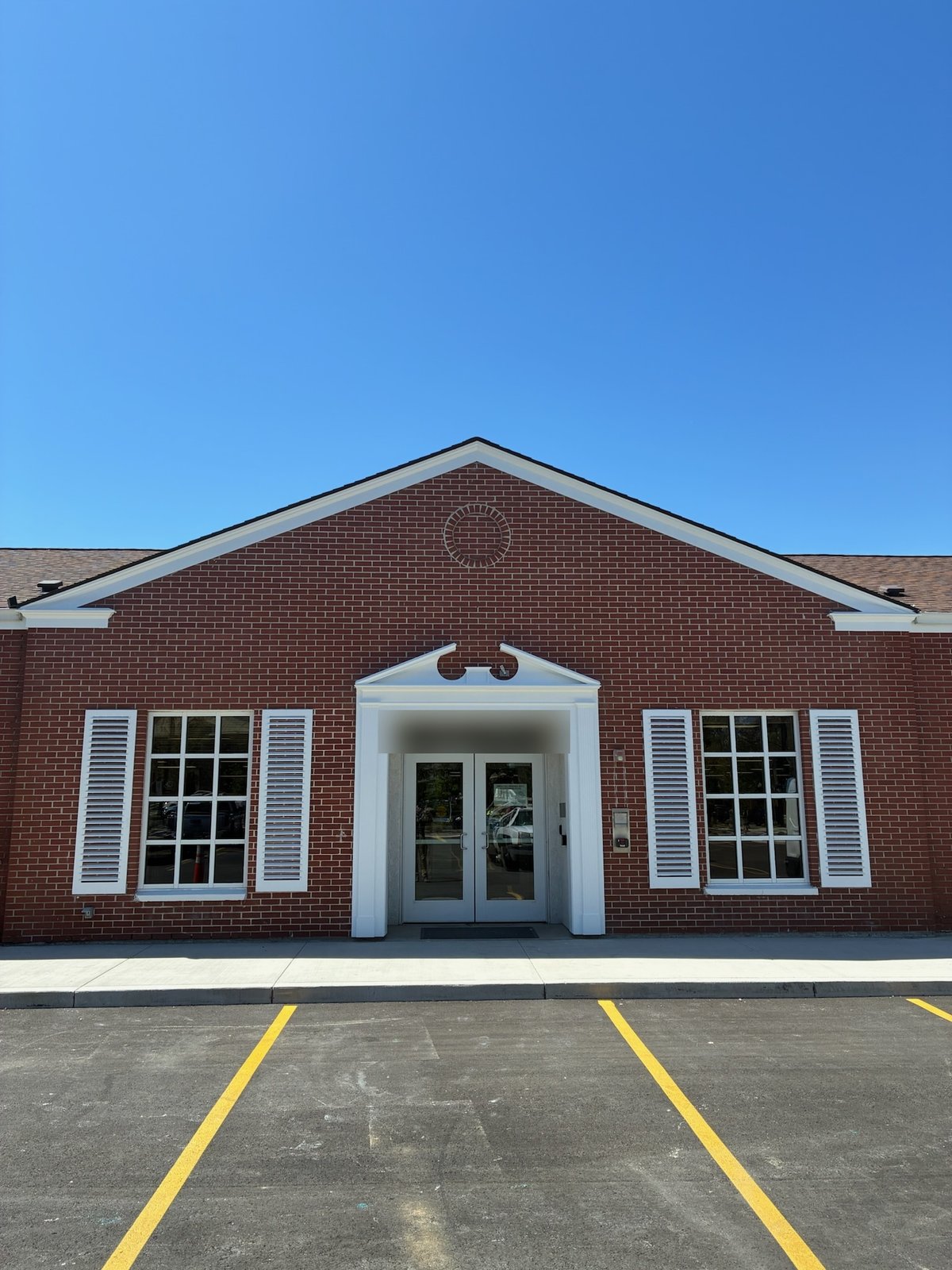
Restoring historic exterior trim on a public building means replacing failed material without changing the building's appearance — matching existing pillar, fascia, and crown moulding profiles while switching to modern engineered substrates that will actually survive Idaho's freeze-thaw cycles. That's the job we recently took on as a trim subcontractor for McAlvain, the general contractor on a State of Idaho Division of Public Works deferred-maintenance project (contract TVR1, MDB #323003) at an Idaho Department of Labor building in Boise.
This post covers the parts of that job that other trades and GCs actually ask about: material selection for exterior trim replacement, how we approached profile matching without altering the building's original lines, and how a subcontractor scopes and sequences this kind of work inside a state deferred-maintenance contract.
What the Scope Actually Included
The building needed a full exterior trim refresh, not a patch job. Scope included:
- Removal and replacement of four exterior shutters
- Rebuild of the front entrance pillars, base moulding, and all upper moulding — with the base layer of trim and entrance structure left intact
- Removal and replacement of two 24-inch diameter vents on each side of the building
- Full fascia board replacement across the front and both sides of the building, plus rebuild of the built-up crown moulding
- Removal and reinstallation of gutters to allow fascia access
That last item matters more than it sounds. On a deferred-maintenance building, gutters, fascia, and crown are all interdependent — you can't sequence fascia replacement without pulling gutters first, and you can't quote the job accurately if you treat gutter removal as an afterthought instead of its own line item.
Why Deferred-Maintenance Trim Work Is a Different Job Than New Construction
New-build exterior trim is a known quantity: you're matching a spec, not a building. Deferred-maintenance restoration work is closer to a diagnostic job. The original moulding profiles have to be read directly off the building — what's still sound, what's rotted past the point of patching, and where the profile lines actually break — before any material gets ordered. On a public building under a state contract, that also means documenting existing condition and matching profiles closely enough that the finished product doesn't read as "repaired" from the street or in a future inspection.
That's a different skill set than running new trim from a plan set, and it's worth pricing differently. Profile matching, existing-condition assessment, and lift access all add time that a new-construction fascia bid doesn't carry.
Material Selection: Why We Didn't Use Solid Wood
For exterior trim on a public building expected to hold up for decades with minimal maintenance, we specified engineered substrates over solid wood for both the fascia and the built-up crown:
| Component | Material | Why |
|---|---|---|
| Fascia boards (replacing 1x8) | Miratec engineered lumber | 50-year manufacturer warranty; resists the moisture cycling that rots solid wood fascia on multi-decade timelines |
| Built-up crown and upper moulding | Extira engineered sheet lumber | 10-year manufacturer warranty; machines and profiles cleanly for built-up moulding work; more dimensionally stable than solid stock in exterior exposure |
Both materials get primed before installation — Extira crown and moulding specifically gets a full prime coat before it goes up, not just after — and both are painted as part of the finished install. On a deferred-maintenance contract, the manufacturer warranty on the substrate is part of what you're delivering to the owner, not just the labor. That's worth stating explicitly in your proposal if you're bidding similar work: the warranty term on your specified material is a line item the GC and building owner can point to.
Working as a Trim Sub Under a GC on a State Contract
A few things about this job are specific to working under a general contractor on a state deferred-maintenance contract rather than direct with a property owner:
- Scope gets locked to a project number. Everything on this job tied back to a specific contract and MDB number — useful for the GC's records, but it also means change orders need to reference that same scope language, not just get handled verbally.
- Lift and access costs get their own line. Multi-story exterior work — vents, upper fascia, crown — needs lift rental factored into every relevant line item, not folded into general labor. We broke lift cost out per scope item (shutters, entrance moulding, vents, fascia) rather than bundling it.
- Existing structure stays intact where specified. The entrance moulding scope explicitly called for the base layer of trim and entrance structure to remain — we were replacing the visible upper elements, not rebuilding the whole assembly. Reading a scope like that correctly before bidding avoids both underbidding (assuming full teardown) and overbidding (assuming more demo than the GC actually wants).
FAQ
What's the difference between Miratec and Extira for exterior trim? Miratec is an engineered fascia/trim board built for flat, linear applications like fascia boards, with a 50-year manufacturer warranty in most exterior applications. Extira is an engineered sheet product that machines well for profiled, built-up work like crown moulding, typically carrying a shorter (10-year) manufacturer warranty. We use Miratec for flat fascia runs and Extira where we need to shape a built-up profile.
Why not just replace historic exterior trim with solid wood? Solid wood can match appearance, but on a public building with a long inspection/maintenance cycle, moisture cycling and the freeze-thaw swings common in Idaho winters make solid wood a higher long-term maintenance liability. Engineered substrates with manufacturer warranties shift some of that long-term risk off the building owner.
How do you match an existing moulding profile without a set of original plans? You read it off the building. On restoration and deferred-maintenance work, we assess what's salvageable versus what needs full replacement, and profile-match against the sound original material still in place rather than working from a spec sheet.
Do subcontractors need to worry about state contract numbers on a job like this? Yes — when you're working under a GC on a state or public works contract, the project number and scope language in the RFP govern change orders and scope disputes. Bid and document against that reference, not just a verbal understanding with the GC's site contact.