Commercial Casework · October 8, 2026 · 10 min read
Commercial Casework Edgebanding: What Actually Determines a Clean, Durable Edge
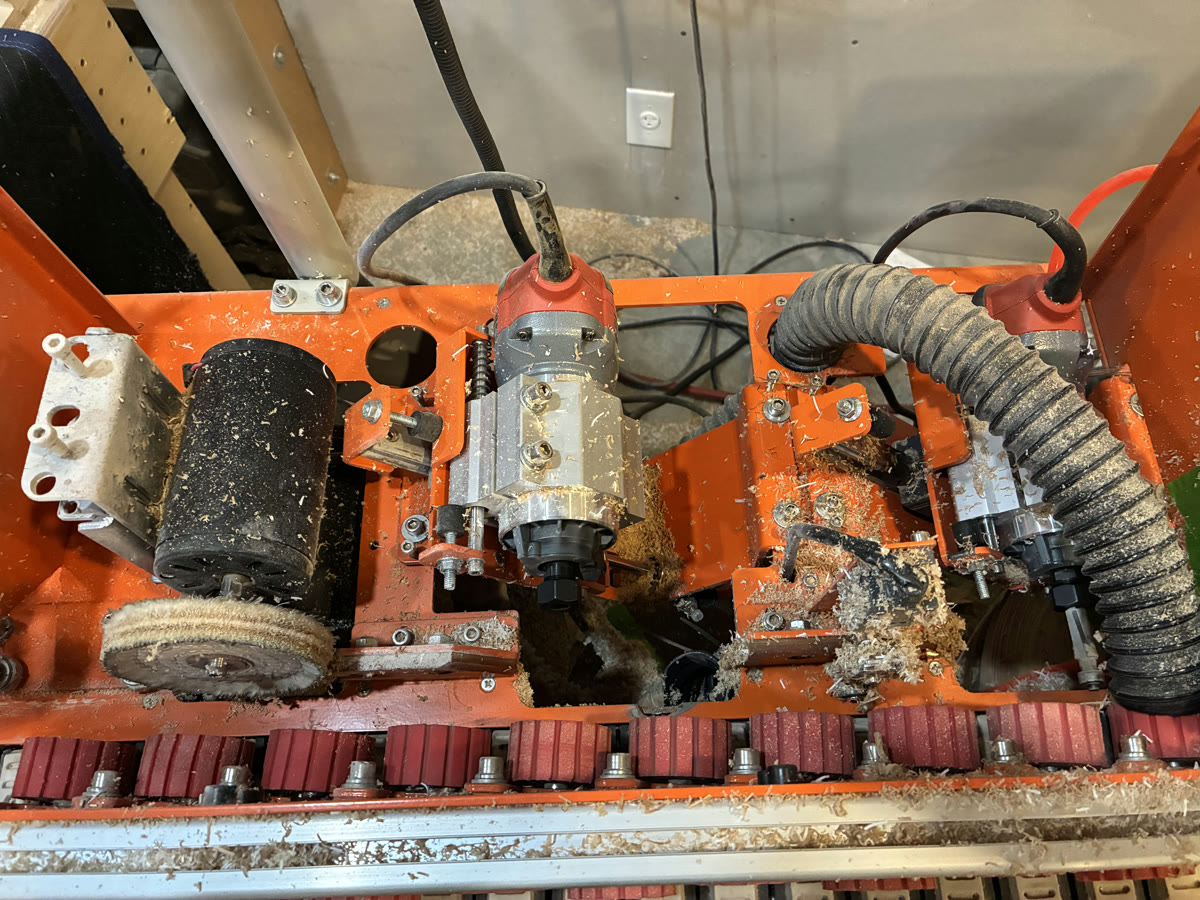
A clean edgebanded panel depends on more than the strip of material covering the edge.
The substrate has to arrive square and clean. The edgeband has to match the panel and the project specification. Adhesive application, temperature, pressure, trimming, scraping, and final inspection all have to work together.
Get those things right and the edge almost disappears into the finished panel.
Get one wrong and a cabinet part that was machined accurately on the CNC can still leave the shop looking cheap.
For commercial casework, where TFL, HPL, melamine, PVC, ABS, and other panel products are common, edgebanding is part of the finished product—not an afterthought after cutting.
What Edgebanding Actually Does in Commercial Casework
Most panel-based cabinet components have an exposed core after they are cut.
Edgebanding covers that core and turns the panel edge into a finished surface.
Depending on the project, that edge may be highly visible—a door, drawer front, shelf, finished end, or open cabinet—or nearly hidden after assembly.
That distinction matters because commercial specifications can define which surfaces are exposed, semi-exposed, or concealed and what edge treatment each requires.
The Architectural Woodwork Institute's current architectural wood casework requirements call for edgebanding on exposed and semi-exposed edges and allow HPDL, PVC, or ABS edges from 0.5 mm to 3 mm on decorative-laminate casework unless the project specification dictates otherwise. AWI also requires PVC or ABS over 1 mm to be radiused or beveled at exposed edges and corners. AWI architectural wood casework requirements
That is why an edge detail should be resolved at submittal—not after the cabinet parts have already been cut.
A Good Edge Starts Before the Part Reaches the Edgebander
One of the easiest mistakes is treating CNC machining and edgebanding as two unrelated shop operations.
They are directly connected.
The edgebander cannot correct a bad substrate edge.
If the CNC or saw leaves excessive chipping, an inconsistent edge, a damaged face, or material that is not square, the edgebanding process inherits the problem.
Modern edgebanding equipment often uses premilling specifically to establish a clean panel edge before adhesive and edge material are applied. Machine manufacturers also emphasize accurate workpiece guidance because the relationship between the panel and the machining units has to remain consistent through the entire process. HOMAG edgebanding equipment overview
Our practical sequence starts upstream:
Digital part → CNC machining → edge inspection → edgebanding → final edge inspection → assembly
If a component fails the edge inspection, sending it into the edgebander faster does not improve it.

Four Variables Control Most Edgebanding Quality
There are dozens of machine adjustments, but most edge-quality problems eventually lead back to four categories.
1. The substrate edge
The band is following whatever is underneath it.
A square, consistent substrate edge gives the machine something predictable to work with. Chipping, damaged face material, inconsistent thickness, contamination, or a rough cut immediately make the next operation harder.
This is particularly visible on thin edgebanding because there is very little material available to disguise what happened underneath it.
2. Adhesive application and temperature
The objective is not simply to put glue on the board.
The adhesive system has an operating window, and the machine, material, shop temperature, feed rate, and edge product all have to work within it.
We avoid treating a temperature setting as a permanent number carved into the machine.
Material conditions change.
Follow the adhesive and equipment manufacturers' operating guidance for temperature, material conditioning and feed rate; the correct settings depend on the system being used. HOMAG edgebanding equipment overview
That second point is worth paying attention to in Idaho.
A sheet that spent the night in a cold delivery truck or unconditioned storage area is not entering the machine under the same conditions as material that has stabilized inside the shop.
The machine does not know that unless the operator does.
3. Pressure
Once the adhesive and edge material meet the panel, they have to stay in controlled contact.
Pressure rollers are a standard part of professional edgebanding equipment because their job is to establish that bond while guiding the edge against the substrate consistently. HOMAG edgebanding equipment overview
Too many downstream defects get attacked with trimming adjustments when the real problem began earlier in the process.
If the band was never seated correctly, a scraper cannot fix the bond.
4. Trimming, scraping, and cleanup
The band normally enters the machine oversized relative to the panel.
That excess has to be processed.
Depending on the equipment and edge material, the downstream operations can include end trimming, top-and-bottom trimming, radius machining, scraping, glue-line cleanup, and buffing. Commercial edgebanders are specifically designed around these sequential operations. HOMAG edgebanding equipment overview
This is the point where thousandths of an inch become visual.
A band left slightly proud catches light differently.
Cut it too aggressively and the machine can mark the panel face.
A poorly set radius looks inconsistent from part to part.
Residual adhesive makes an otherwise clean cabinet look unfinished.
The machine is doing repetitive work, but someone still has to decide when the result is acceptable.
Matching the Edge to the Face Is More Than Picking “Walnut”
Decorative panels have become considerably more specific than generic white, black, maple, and walnut.
A panel may have a particular color, grain structure, surface texture, gloss level, and embossing pattern.
Edgeband manufacturers therefore produce matching programs for specific laminate and TFL collections. REHAU, for example, catalogs ABS, PVC, polypropylene, and specialty edges matched to specific panel manufacturers, colors, textures, patterns, and gloss levels. REHAU edgeband materials and matching
A close match matters because the edge becomes part of the visual face of the casework.
A brown edge on a walnut panel is not necessarily a walnut match.
For trade work, the better workflow is to coordinate the actual panel selection and actual edge selection together during material submittals.

Thin Edge or Thick Edge? Start With the Specification
There is no universal rule that every commercial cabinet should receive the thickest available edgeband.
Different edges solve different problems.
A thin matching edge can produce a clean visual transition and is common on many casework components. A thicker edge creates a more substantial perimeter and can allow a radius or bevel, which may be desirable on frequently handled parts.
The project specification should control that decision when one is provided.
Under AWI's decorative-laminate casework requirements, acceptable edge materials include HPDL, PVC, and ABS from 0.5 mm through 3 mm, with additional treatment required when PVC or ABS exceeds 1 mm. AWI architectural wood casework requirements
For a bid or submittal, we want to know:
| Item | Question to resolve |
|---|---|
| Panel | Manufacturer, product, color and thickness |
| Edge material | PVC, ABS, HPDL or specified alternative |
| Edge thickness | What does the specification require? |
| Match | Exact coordinated match or approved compatible selection? |
| Locations | Which edges are exposed, semi-exposed or concealed? |
| Corner treatment | Square, bevel or radius? |
| Grain/pattern | Does the edge have a direction that must remain consistent? |
| Sample | Is a physical material sample required for approval? |
Coordinate grain direction and the sequence of edge and face lamination so adjoining parts remain visually consistent. AWI architectural wood casework requirements
Those are small details until fifty cabinets are standing next to each other.
Then inconsistency becomes obvious.
What Common Edge Problems Tell Us
An edge defect is usually evidence.
Instead of immediately adjusting everything on the machine, we try to identify which part of the process the defect is pointing toward.
| What we see | Where we start looking |
|---|---|
| Visible or inconsistent glue line | Panel edge, adhesive application, pressure, material temperature |
| Band not seated consistently | Pressure system, edge feed, substrate straightness |
| Band proud of panel face | Trim setup and edge-thickness settings |
| Face damaged beside band | Trimmer/scraper adjustment or upstream face damage |
| Rough radius | Radius tooling or scraper setup |
| Chipping beneath band | CNC/saw cut quality or premilling |
| Residual adhesive | Glue application and cleanup/scraping stage |
| Edge color stands out | Wrong edge match, texture, gloss or adhesive visibility |
| Failure isolated to certain parts | Material condition, orientation, temperature or upstream machining |
That table is a diagnostic starting point, not a substitute for the machine manufacturer's setup procedure.
Changing three adjustments simultaneously makes troubleshooting harder because it removes the ability to identify what actually fixed—or caused—the problem.
Why Edgebanding Matters More on Commercial Work
Commercial casework tends to repeat.
That is good for production, but it magnifies inconsistency.
One imperfect cabinet in a one-off residential built-in may be noticed as one imperfect cabinet.
A slightly inconsistent edge repeated across thirty doors, eighty shelves, and multiple rooms becomes a project-wide manufacturing issue.
Commercial work also introduces another layer: the approved submittal.
The material, color, edge thickness, exposed surfaces, and detail shown on the submittal need to be the same system that reaches the jobsite.
That traceability is part of why we are building more structure into our commercial production process.
The goal is not simply:
Cut → Band → Assemble
It is:
Specification → Submittal → Approved material → Programmed parts → Controlled production → Inspection → Installation
The machinery supports that process.
It does not replace it.
Edgebanding Is Also a Procurement Issue
A shop can own the correct machine and still create schedule problems if the matching edge material is not available when production starts.
This becomes especially relevant on commercial projects using specified laminates, TFL patterns, or less-common edge thicknesses.
Panel availability and edge availability need to be checked together.
If a specified sheet product has an eight-week lead time and its matching edgeband has a ten-week lead time, the project's material lead time is ten weeks.
That is the number that matters.
For GCs and design teams, approving major casework finishes early gives the fabricator a much better chance of protecting the schedule.
What We Inspect Before an Edgebanded Part Moves to Assembly
Our inspection is simple because it needs to be repeatable.
Before the component moves forward, we are looking for:
- complete adhesion;
- consistent edge position;
- clean top and bottom transitions;
- acceptable end trimming;
- no visible damage to the panel face;
- correct radius or bevel where required;
- acceptable glue-line appearance;
- correct color and pattern match;
- correct edge on the correct side of the part; and
- consistency with the rest of the package.
That last item matters.
A technically acceptable part can still be wrong if it does not match the parts surrounding it.
Frequently Asked Questions About Commercial Casework Edgebanding
What materials are commonly used for commercial cabinet edgebanding?
PVC, ABS, and high-pressure decorative laminate are common edge materials for decorative-laminate casework. AWI recognizes these materials within its architectural wood casework requirements, subject to the applicable specification and construction standard. AWI architectural wood casework requirements
What thickness of edgebanding should commercial casework use?
There is no single thickness for every project. AWI permits decorative-laminate casework edges from 0.5 mm through 3 mm under its standard, but the architect's specification, approved submittal, design intent, and use condition should control the actual selection. AWI architectural wood casework requirements
Why does edgebanding sometimes peel?
Delamination can have several causes, including problems with the substrate edge, adhesive application, temperature, pressure, contamination, or the compatibility of the materials being processed. The failure should be diagnosed systematically rather than assuming the edge material itself is defective.
Does CNC cut quality affect edgebanding?
Yes. Edgebanding follows the substrate edge created upstream. Chipping, an inconsistent edge, or damaged face material can remain visible after the band is applied. That is why panel machining and edge processing should be treated as one production sequence.
Can edgebanding match woodgrain TFL or laminate?
Yes. Major edgeband manufacturers offer coordinated colors, patterns, textures, and gloss levels for many panel products. The specific panel and edge should still be reviewed together rather than assuming a generic species or color name will match. REHAU edgeband materials and matching
Does an edgebander eliminate hand inspection?
No.
Automation creates consistency when the setup and incoming parts are correct. The finished component still needs to be inspected for adhesion, trimming, surface damage, visual match, and compliance with the project's approved details.
Can 3D Cabinetry fabricate casework components for another contractor or millwork shop?
Yes. Our Boise shop can review commercial casework, architectural millwork, CNC fabrication, and component-production scopes separately from full installation when that structure makes sense for the project. Our current commercial capabilities include TFL/melamine, PLAM/HPL, veneer, hardwood, MDF, CNC processing, edge treatment, assembly, finishing, delivery, and installation. Commercial capabilities
A Finished Edge Reflects the Whole Process
Edgebanding looks like a small operation.
In commercial casework, it is one of the places where material specification, CNC machining, machine setup, adhesive behavior, finish quality, and operator judgment all meet on the same 3/4-inch edge.
The band itself is only the visible part.
The quality underneath it was determined several steps earlier.
At 3D Cabinetry & Custom Renovations, we are continuing to build our Boise shop around that kind of controlled production: digital fabrication where repeatability matters, hands-on inspection where judgment matters, and clear coordination with the GC, architect, designer, or millwork partner before material goes into production.
For commercial casework, architectural millwork, CNC fabrication, or component-production scopes, send us the plans, specifications, material schedule, and required delivery date. We’ll review the package and identify the fabrication requirements before pricing.
For commercial casework, architectural millwork or component-production scopes, send plans for bid review or view our commercial capabilities. For coordination before fabrication, read our break room casework checklist.